
How to Reduce Noise in Data Center Cooling Systems Fan Noise, Vibration, and Panel Resonance Require Engineered Material Solutions
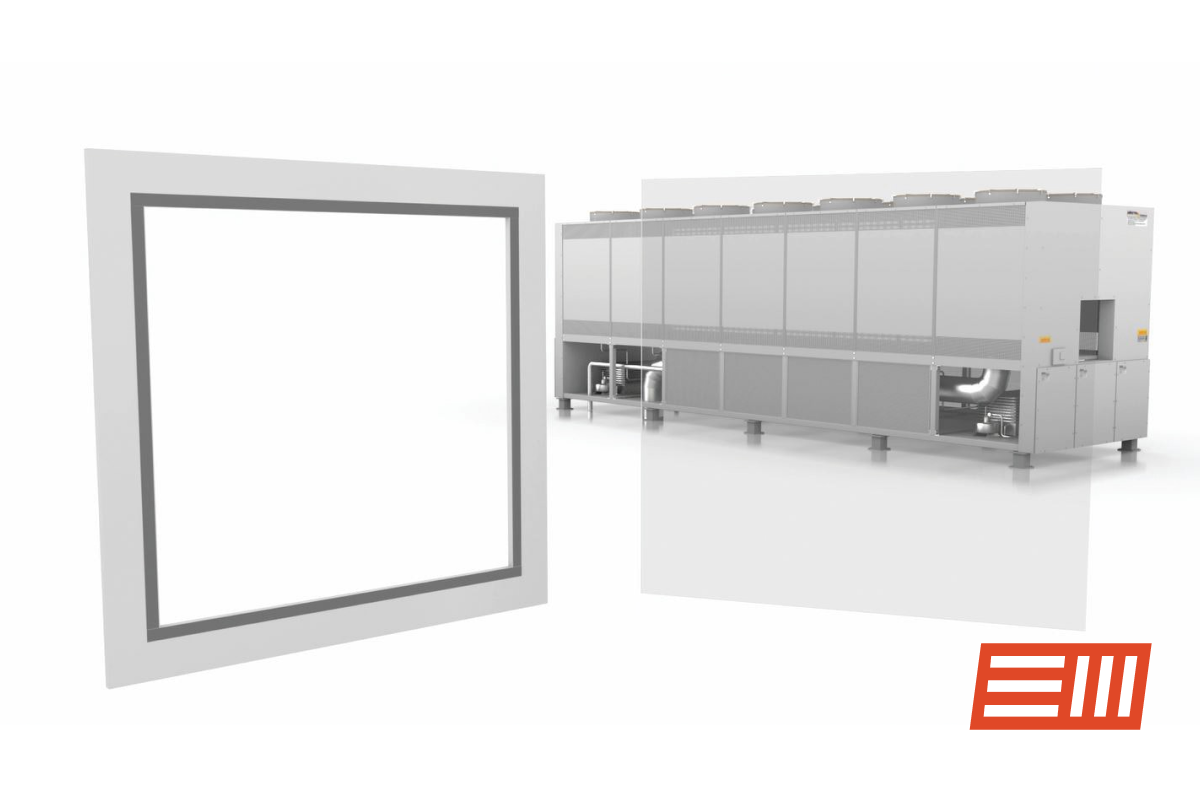
As data centers continue to increase computing density, cooling equipment is working harder than ever before. Higher airflow rates, larger fan arrays, increased pump capacity, and more aggressive heat-rejection strategies are helping operators manage thermal loads, but they also create a growing challenge: noise, vibration, and harshness (NVH).
For many OEMs, effective data center cooling noise reduction requires understanding whether the dominant issue is airborne sound, structure-borne vibration, or panel resonance. Each mechanism affects cooling equipment acoustics differently and often requires a different material strategy. Engineers frequently attempt to solve these issues with acoustic foam. While acoustic foams play an important role, they often only mask the underlying issue.
Most data center cooling noise originates from three distinct mechanisms:
Airborne noise
Structure-borne vibration
Panel resonance
Each mechanism requires a different strategy. Understanding the differences can help engineers improve acoustic performance, increase equipment reliability, and avoid costly redesign.
Why Conventional Noise Reduction Approaches Often Fail
When excessive noise is discovered during testing, the first response is often to add acoustic insulation to the interior of the enclosure. While this may reduce some high-frequency sound reflections, it frequently has little effect on overall sound pressure levels because the dominant source of the noise may not be airborne sound at all.
A cooling unit can generate noise through:
Fan blade pass frequencies
Air turbulence through heat exchangers
Motor vibration
Pump vibration
Sheet metal resonance
Cabinet wall excitation
Access panel vibration
An enclosure may contain acoustic foam and still radiate significant noise if vibration is being transmitted through structural components. Likewise, vibration isolators alone cannot solve airflow-generated noise. The challenge is not selecting a single "best" material. The challenge is matching the material to the failure mechanism.
Understanding the Three Sources of Data Center Cooling Noise and Vibration
Airborne Noise
Airborne noise is generated when airflow disturbances from fans or CRAH units create pressure waves that travel through the air.
Acoustic absorption materials are often the most effective solution.
Structure-Borne Vibration
Structure-borne vibration occurs when rotating equipment, like motors and compressors, transfers energy into the enclosure structure.
Once vibration enters the structure, it can travel through mounting points, frames, and cabinet walls before becoming audible noise. Vibration isolation materials are typically required to address this issue.
Panel Resonance
Panel resonance occurs when vibration excites large sheet-metal surfaces. In many cooling systems, side panels, doors, and access covers behave like loudspeaker diaphragms. The equipment may not generate significant airborne noise, yet vibrating panels can amplify and radiate sound throughout the facility.
Using Open-Cell Foams for Airborne Noise Control
Open-cell polyurethane foam is one of the most commonly used acoustic absorption materials in industrial equipment. Its interconnected cellular structure allows sound waves to enter the material and dissipate energy through friction and air movement within the foam matrix.
Typical advantages include:
Good mid-frequency absorption
Lightweight construction
Cost effectiveness
Easy fabrication
Availability with pressure-sensitive adhesives
Melamine foam often provides superior acoustic performance for more demanding applications. Melamine foam is an open-cell thermoset material known for its excellent sound absorption characteristics and low density.
Compared with conventional polyurethane foams, melamine foam often provides:
Improved sound absorption efficiency
Better temperature resistance
Lower weight
Improved flame performance
These materials can significantly reduce reflected sound energy inside cooling equipment. However, they are not designed to isolate vibration or reduce panel resonance. Requires application-specific validation for moisture exposure and temperature conditions.
Acoustic Insulation with Needled Mats and Thinsulate™ Materials
Needled nonwoven blankets are manufactured by mechanically interlocking fibers into a dense, resilient mat structure. Unlike many foam materials, these products can provide excellent acoustic absorption while maintaining flexibility and durability. One common example is polyester acoustic insulation products such as DB-Lyte® and similar needled fiber materials. These materials work by allowing sound waves to enter the fiber matrix, where friction between fibers converts acoustic energy into small amounts of heat.
Typical advantages include:
Excellent broadband sound absorption
Lightweight construction
Good thermal insulation properties
Low moisture absorption
Flexible installation
Durable performance under vibration
3M™ Thinsulate™ insulation materials combine acoustic absorption and thermal insulation within an extremely lightweight nonwoven structure. Thinsulate products use fine microfiber technology to create a large internal surface area capable of absorbing sound energy while simultaneously reducing heat transfer. For data center cooling equipment, this dual functionality can be particularly valuable because both acoustic control and thermal management are often design priorities.
Benefits include:
Excellent acoustic absorption per unit weight
Thermal insulation capability
Flexible and conformable construction
Resistance to vibration-induced settling
Low weight compared to many traditional insulation materials
Solving Structure-Borne Vibration with Engineered Foam Tapes
While acoustic foams help absorb airborne sound, they do little to stop vibration from entering the enclosure structure. Once vibration enters the enclosure structure, acoustic foam provides little benefit. Instead, engineers must interrupt vibration transmission paths.
PORON® or IsolossTM Microcellular polyurethane foams are widely used in applications requiring precise vibration control and long-term mechanical stability. Unlike many conventional foams, PORON materials exhibit low compression set and maintain their performance through repeated loading cycles.
Typical applications include:
Fan mounting pads
Pump isolation points
Electronics mounting
Anti-rattle components
Equipment support pads
Because of their excellent recovery characteristics, PORON materials are frequently used where equipment operates continuously and vibration isolation performance must remain consistent over many years.
Vinyl Nitrile Foam is commonly selected when engineers need a combination of vibration damping, thermal insulation, and environmental resistance. Its closed-cell structure helps resist moisture intrusion while also providing cushioning and vibration attenuation. It is a standard for data center applications due to its excellent flame and smoke performance. This makes vinyl nitrile particularly useful in cooling infrastructure where condensation control, vibration management, and UL ratings are important design considerations.
Typical applications include:
Cooling cabinet insulation
Duct isolation
Equipment enclosures
Thermal and acoustic barriers
Vibration break components
Because it combines sealing, thermal, and acoustical benefits, vinyl nitrile foam is frequently used in cooling infrastructure where condensation control and vibration management must coexist.
Blended EPDM foams provide a cost-effective solution for many vibration-control and sealing applications. These materials offer good compression recovery, weather resistance, and long-term durability in demanding mechanical environments.
Common applications include:
Access door gaskets
Equipment panel seals
Airflow dampers
Vibration isolation pads
Cabinet gasketing
As a closed cell elastomerics, EPDM foams can simultaneously provide sealing, insulating, and vibration reduction, they are often used in multifunctional converted components.
Controlling Panel Resonance with 3M™ 2252 and 3M™ 8840 Sound Deadening Pads
One of the most overlooked sources of cooling-system noise is panel resonance. Large sheet-metal surfaces can behave like loudspeaker diaphragms when excited by fan, motor, or pump vibration. When panel resonance is the root cause, sound damping materials are often more effective than acoustic foams.
3M™ 2252 Sound Damping Material is designed to reduce vibration in sheet-metal structures through viscoelastic damping. Rather than blocking sound, the material converts vibration energy into small amounts of heat, reducing the amplitude of panel vibration.
Typical applications include:
Cabinet walls
Fan housings
Access doors
Equipment covers
Electrical enclosures
When applied to resonant surfaces, damping materials can significantly reduce radiated noise without requiring major design changes.
3M™ 8840 Sound Deadening Pads provide a convenient solution for reducing structure-borne noise and panel vibration for larger panels and higher vibration environments. These self-adhesive damping pads consist of a dense viscoelastic layer laminated to an aluminum constraining layer. When vibration attempts to flex the panel, the damping layer dissipates mechanical energy and reduces resonant amplification.
Common applications include:
Large cooling-unit access panels
Fan-wall enclosures
Pump housings
Chiller cabinets
Liquid cooling system enclosures
Because the pads can be applied directly to problem areas, they are frequently used during both prototype development and production optimization to reduce noise without redesigning the enclosure structure.
Converting Considerations for OEM Designs
Material performance is only part of the solution. Converting methods can significantly influence assembly consistency and long-term performance.
Common converting methods include:
Die-cut insulation components
Laminated multi-layer constructions
Precision slit tapes
Custom gasket fabrication
Properly converted materials improve installation repeatability, reduce assembly time, and help maintain consistent acoustic performance across production volumes.
Testing and Validation
NVH solutions should always be validated under real operating conditions.
Relevant testing may include:
ASTM D3574 for flexible cellular materials
ASTM D1056 for cellular rubber materials
IEC 60068 vibration testing
SAE J1211 environmental evaluation methods
Engineers should evaluate:
Sound pressure levels
Vibration amplitudes
Compression set
Long-term material recovery
Thermal cycling performance
Actual performance will depend on equipment design, operating conditions, mounting geometry, and environmental exposure.
Noise Reduction Starts with the Right Material
Reducing noise in data center cooling systems requires more than adding acoustic foam to an enclosure. Airborne noise, structure-borne vibration, and panel resonance are separate engineering challenges that require different material solutions. By matching materials to the underlying failure mechanism, engineers can improve acoustic performance, increase equipment reliability, and create quieter cooling systems without compromising thermal performance.
If you're evaluating NVH issues in a cooling-system design, EMI can assist with material selection, rapid prototyping, die-cutting, laminating, and custom-converted components tailored to your application.
FAQ
Can acoustic foam eliminate all cooling system noise?
No. Acoustic foam primarily absorbs airborne sound. Vibration transmission and panel resonance often require vibration isolation materials or sound damping products.
What is the difference between sound absorption and sound damping?
Sound absorption materials reduce airborne noise by converting sound energy into heat. Sound damping materials reduce vibration within structures and help prevent panel resonance.
What are needled acoustic blankets used for?
Needled acoustic blankets are commonly used to reduce airborne noise within large enclosures, fan wall systems, cooling cabinets, and air handling equipment. They can also provide thermal insulation benefits.
How does Thinsulate differ from acoustic foam?
Thinsulate is a nonwoven microfiber insulation material that provides both acoustic absorption and thermal insulation. It is often selected when engineers need high acoustic performance with minimal added weight.
What foam is best for fan vibration isolation?
PORON® or IsolossTM microcellular urethane is frequently used for vibration isolation because of its low compression set and long-term recovery characteristics.
Why do cooling system panels become noisy?
Vibration from fans, pumps, and motors can excite sheet-metal panels, causing them to resonate and radiate sound into the surrounding environment.