
Are You Using the Right Foam for High-Vibration Applications?
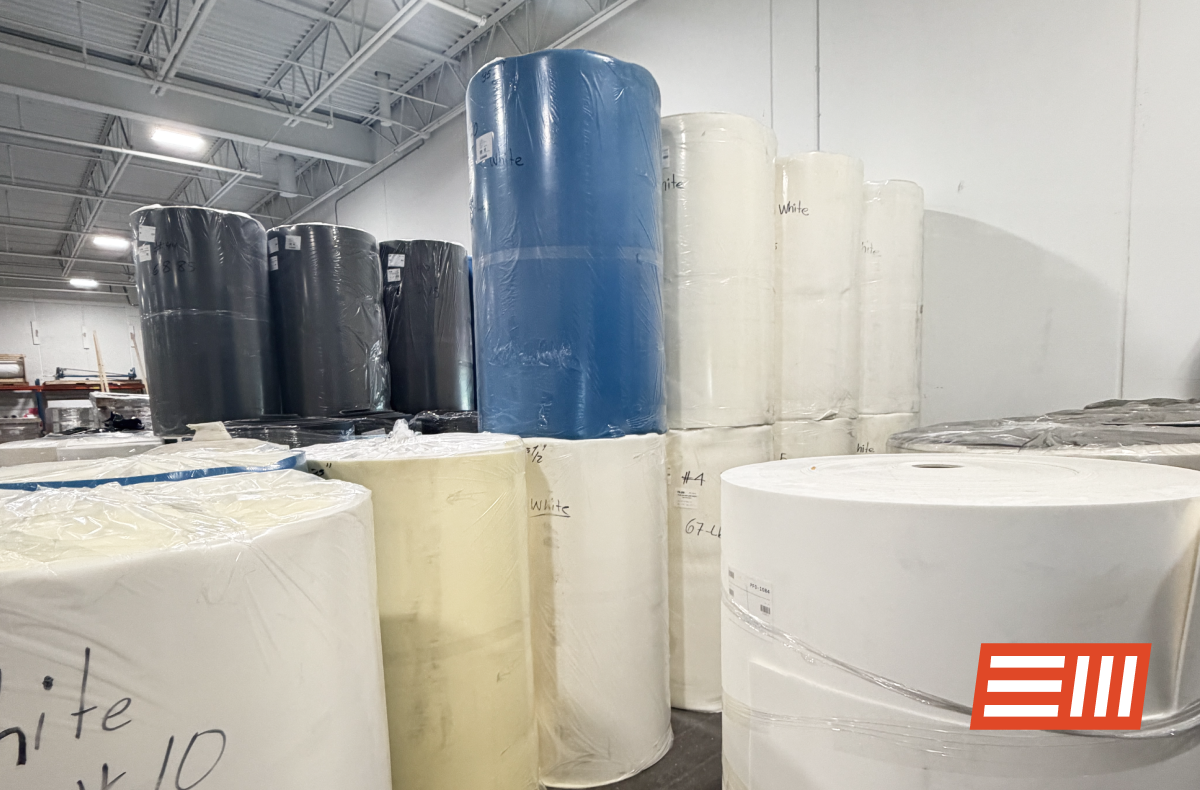
Vibration is one of the most persistent causes of premature component failure. Left unmanaged, it loosens fasteners, accelerates fatigue, generates noise, and shortens equipment service life. The foam material between components determines whether that energy gets absorbed, isolated, or transmitted deeper into the assembly.
Not all foams manage vibration the same way. Performance depends on material chemistry and cellular structure, and those variables interact differently across frequency ranges, load conditions, and operating environments. Soft foam materials fall into two categories: open-cell and closed-cell.
Why Vibration Control Requires More Than Standard Cushioning
Static cushioning and dynamic vibration damping are different engineering challenges. A material that performs well under compressive load may transmit rather than absorb vibrational energy. In transportation assemblies, vibration frequencies commonly range from 5 Hz to 500 Hz; industrial equipment can extend into the kilohertz range.
Uncontrolled vibration causes:
· Fatigue failure in foam cell walls and adjacent components
· Fastener loosening over repeated load cycles
· Accelerated component wear at contact surfaces
· Noise generation in enclosed assemblies
The right foam converts vibrational energy into low-level heat through internal damping, reducing transmitted force to adjacent components.
For vibration-sensitive assemblies, material selection should be validated using application-representative testing rather than static material properties alone. Standards such as IEC 60068 vibration testing and SAE J1211 environmental testing for vehicle electrical systems can help engineers evaluate long-term durability under combined vibration, temperature, and environmental exposure. Dynamic mechanical analysis (DMA) can also be useful for characterizing damping behavior across operating frequencies and temperatures.
Urethane Foams
Polyurethane (PU) foam is the most common open-cell foam for vibration damping and NVH (noise, vibration, and harshness) control. Its open-cell structure allows air displacement under dynamic loading, the primary mechanism for energy dissipation at mid-frequencies. Both low- and high-density formulations are available depending on load. Low-density PU is economical, lightweight, and compressible with excellent rebound, suiting vibration damping, sound absorption, and light-duty gasketing; high-density PU handles greater loads while keeping the open-cell structure's energy absorption.
Polyurethane damps reliably across mid-frequencies (20 to 200 Hz). Typical applications include instrument panel isolation, electronic equipment mounting pads, HVAC duct liners, and machinery mounts.
For applications above 200 Hz, consider high-density PORON microcellular urethane. Unlike lower-density acoustic foams that damp primarily through air displacement, PORON derives its vibration damping from the viscoelastic properties of its fine, controlled cell geometry. That makes it the choice for consistent dynamic response, strong compression set resistance, and shock isolation of sensitive electronics, suiting handheld devices, battery compartments, and precision gasketing where dimensional stability under repeated compression is critical.
In applications where vibration isolation and sealing force must be maintained over extended service life, engineers should evaluate compression-set performance in addition to damping behavior. Microcellular urethane materials are often selected because they retain thickness and force more effectively under repeated loading than many conventional polyurethane foams, helping maintain consistent vibration-management performance over time.
Silicone
Silicone materials are often specified when vibration control must be maintained across wide temperature ranges or in environments that accelerate degradation of conventional foams. Available in both foam and sponge constructions, silicone combines vibration-management capability with excellent resistance to UV exposure, ozone, weathering, and temperature extremes.
Silicone foam is an open-cell material used for cushioning, shock absorption, and vibration management. Its highly compressible structure provides rapid compression recovery under repeated loading cycles, making it well suited for applications where both vibration isolation and long-term durability are required. Engineered Materials supplies Rogers BISCO silicone foam grades for gasketing, sealing, shock absorption, and vibration management in demanding environments.
Elastomeric Closed-Cell Foams
Elastomeric foams are a broad category of closed-cell materials derived from rubber and rubber-blend polymers. Their sealed cell walls resist moisture, gas, and chemical ingress, making them the standard for sealing, gasketing, and sustained-load vibration isolation. Vinyl nitrile, neoprene, and EPDM each offer a different balance of chemical resistance, temperature range, and damping.
Vinyl nitrile (PVC/NBR) foam is a flame-retardant, weather-resistant, highly oil-resistant closed-cell blend. It offers very good vibration and noise damping, excellent fuel and oil resistance, low water absorption, and a compression set of 25% or less across most grades. Applications include engine bay isolation pads, pump and compressor mounts, marine vibration gaskets, and rail car interior panels.
EPDM (ethylene propylene diene monomer) closed-cell foam offers excellent UV, ozone, and weathering resistance, the standard for outdoor and under-hood environments where conventional foams deteriorate.
Neoprene (CR) and blended neoprene (EPDM/CR/SBR) foams are oil and flame resistant with strong elongation; many grades meet UL 94HF-1 and self-extinguish, suiting industrial enclosures and mid-weight component mounting.
Polyethylene (PE) Foam
Crosslinked polyethylene (XLPE) is a thermoplastic closed-cell foam distinct from rubber-based blends, valued for its combination of chemical resistance, moisture barrier performance, and low cost. Closed-cell polyethylene (PE) foam is a chemically resistant, economical option for moisture sealing, light-duty vibration isolation, and component spacing. Applications include gasketing, component spacers, insulation, packaging, and flotation devices.
Polyvinyl Chloride (PVC) Foam
Closed-cell PVC foam, another thermoplastic foam is highly conformable with excellent compression set, unlike vinyl nitrile, which blends PVC with nitrile rubber (NBR) for added fuel and oil resistance. Resistant to weather, fungi, and oxidation, it delivers a positive seal at compression as low as 30%, where closure force is limited. All grades pass FMVSS 302. Applications include enclosure gasketing, weather stripping, and insulation, where conformability and environmental resistance lead.
Silicone sponge is a closed-cell material used when vibration isolation must be combined with environmental sealing. It resists moisture, UV exposure, ozone, and many solvents while maintaining low compression set over extended service life. Depending on grade, Rogers BISCO silicone sponge materials operate from -67°F to 450°F (-55°C to 232°C), making them a common choice for high-temperature sealing and vibration-sensitive assemblies exposed to harsh conditions. Applications include shock absorbers, vibration-management pads, environmental gaskets, HEV enclosures, LCD gaskets, thermal management systems, and outdoor equipment exposed to temperature extremes and weathering. Material Selection Guide
Open-cell foams generally provide better energy dissipation because air movement within the cellular structure and viscoelastic deformation work together to convert vibration into heat. They are often preferred for damping applications where reducing vibration amplitude and noise generation are primary objectives. The tradeoff is that open-cell materials can absorb moisture, are generally less effective environmental seals, and may lose performance more quickly when exposed to oils, contaminants, or harsh outdoor conditions unless specifically engineered for those environments.
Closed-cell foams are typically selected when vibration management must be combined with environmental sealing, fluid resistance, or long-term compression-force retention. While many closed-cell materials provide less intrinsic damping than open-cell foams, they often offer superior durability under sustained loading, lower moisture absorption, and better resistance to oils, fuels, and outdoor exposure. In many industrial and transportation assemblies, the need for sealing and environmental protection makes closed-cell materials the preferred overall solution despite somewhat lower damping efficiency.
Isolation performance depends on the relationship between operating frequency and the mounted system's natural frequency. If the foam is too stiff, vibration transmission increases because the system behaves more like a rigid connection. If the foam is too soft, excessive displacement can occur, potentially causing bottoming out, alignment issues, or secondary impacts during shock events. Selecting an isolator requires balancing damping, support, and allowable movement.
For closed-cell elastomeric foams, ASTM D1056 classifications can provide a useful starting point for material comparison. The specification standardizes properties such as compression deflection, density, and material grade, allowing engineers to evaluate candidate materials using consistent performance criteria before application-specific testing.
· Matching foam to application comes down to four intersecting variables: frequency range, static load, operating temperature, and environmental exposure. Low-frequency isolation (5 to 50 Hz), moderate loads: open-cell urethane foam.
· Oil and fuel exposure, moderate temperatures, mid-frequencies: vinyl nitrile closed-cell foam.
· Light-duty isolation with moisture sealing and cost sensitivity: crosslinked polyethylene foam.
· Enclosure gasketing needing conformability and environmental resistance: closed-cell PVC foam, which seals at low closure force.
· Wide or extreme temperatures: silicone sponge (to 450°F / 232°C) or silicone foam (to 392°F / 200°C), depending on whether sealing or cushioning leads.
· UV and outdoor exposure: EPDM closed-cell foam.
· Flame resistance with moderate chemical exposure: neoprene closed-cell foam.
· High-frequency vibration above 200 Hz, electronics: PORON microcellular urethane.
Key Performance Properties and How to Specify Them
· Transmissibility ratio measures how much vibration passes through the isolator to the protected component. Below 1 means isolation; above 1 means amplification. It peaks at the system's resonant frequency, and a foam isolator only begins reducing transmitted vibration once the operating frequency exceeds roughly 1.4 times that frequency. Lower is better for sensitive components.
· Loss factor (tan δ) is a dimensionless measure of energy dissipation; a higher value means more energy converted to heat per cycle.
· Compression deflection is the force required to compress foam to a defined percentage, critical for maintaining air gap and preventing bottoming out under load.
· Compression set is the permanent deformation remaining after sustained load is removed; closed-cell foams generally outperform open-cell in long-term mount applications. Note that closed-cell foams can lose compression force over time if trapped gas permeates through cell walls or if cell walls rupture under sustained heavy or high-temperature loads.
· Repeated vibration can also gradually alter foam stiffness as cell structures fatigue over millions of load cycles. Even when a foam remains physically intact, changes in stiffness can shift system resonance characteristics and reduce isolation effectiveness over time. Long-life applications should therefore consider both initial performance and retention of dynamic properties after environmental aging.
· Dynamic stiffness is the frequency-dependent ratio of force to deflection under oscillating load, and it typically exceeds a foam's static stiffness. It rises with frequency in most foams, so it must be matched to the isolated component's resonant frequency to keep the system above resonance, where isolation occurs. A foam chosen on static deflection alone can behave stiffer than expected under dynamic load.
Converting and Formats
All of these materials are available as die-cut isolator pads, slit tape with PSA (pressure-sensitive adhesive) backing, and sheet stock. Engineered Materials uses waterjet cutting for thick sections and harder elastomeric compounds, and rotary flatbed die cutting for high-volume production pads. Multi-layer laminations combine a foam damping layer with foil, film, or fabric facing for vibration control and environmental sealing in a single converted part.
Part geometry can significantly influence vibration performance. Pad thickness, loaded area, and adhesive attachment methods all affect dynamic stiffness and energy dissipation. In some applications, converting a material into segmented pads rather than a continuous gasket can improve isolation performance by reducing stiffness and minimizing vibration transmission paths.
FAQs
What is the difference between vibration damping and vibration isolation?
Damping converts vibrational energy into heat within the material, reducing oscillation amplitude over time. Isolation physically decouples a component from the source so transmitted force drops. Most foam isolators do both, but the balance varies by chemistry and frequency.
How do I choose between urethane and vinyl nitrile foam for an engine-adjacent application?
Chemical exposure and temperature decide it. Open-cell urethane is permeable and degrades against oil, fuel, and hydraulic fluid. Vinyl nitrile's PVC/NBR chemistry gives it excellent fuel and moisture resistance as a closed-cell foam, the more durable choice in engine bays. For sustained static load, confirm compression set against the grade datasheet.
What foam performs best across the widest temperature range?
Silicone. Rogers BISCO silicone sponge grades operate from -67°F to +450°F (-55°C to +232°C) depending on grade. Where cushioning and damping lead alongside heat resistance, silicone foam grades are rated to 392°F (200°C). Within -40°F to 200°F, neoprene, EPDM, and vinyl nitrile are more cost-effective.
Working With a Foam Supplier and Converter
Material selection for vibration damping is not a single-variable decision, and the material format is often just as important as the chemistry itself. Engineered Materials has worked with manufacturers across industrial, HVAC, vehicle, aerospace, and electronics markets for over 25 years, and can evaluate foam options against your specific frequency range, load, temperature, and environmental exposure.
Contact Engineered Materials to discuss your application.