
Industrial Uses and Applications of PTFE Tapes
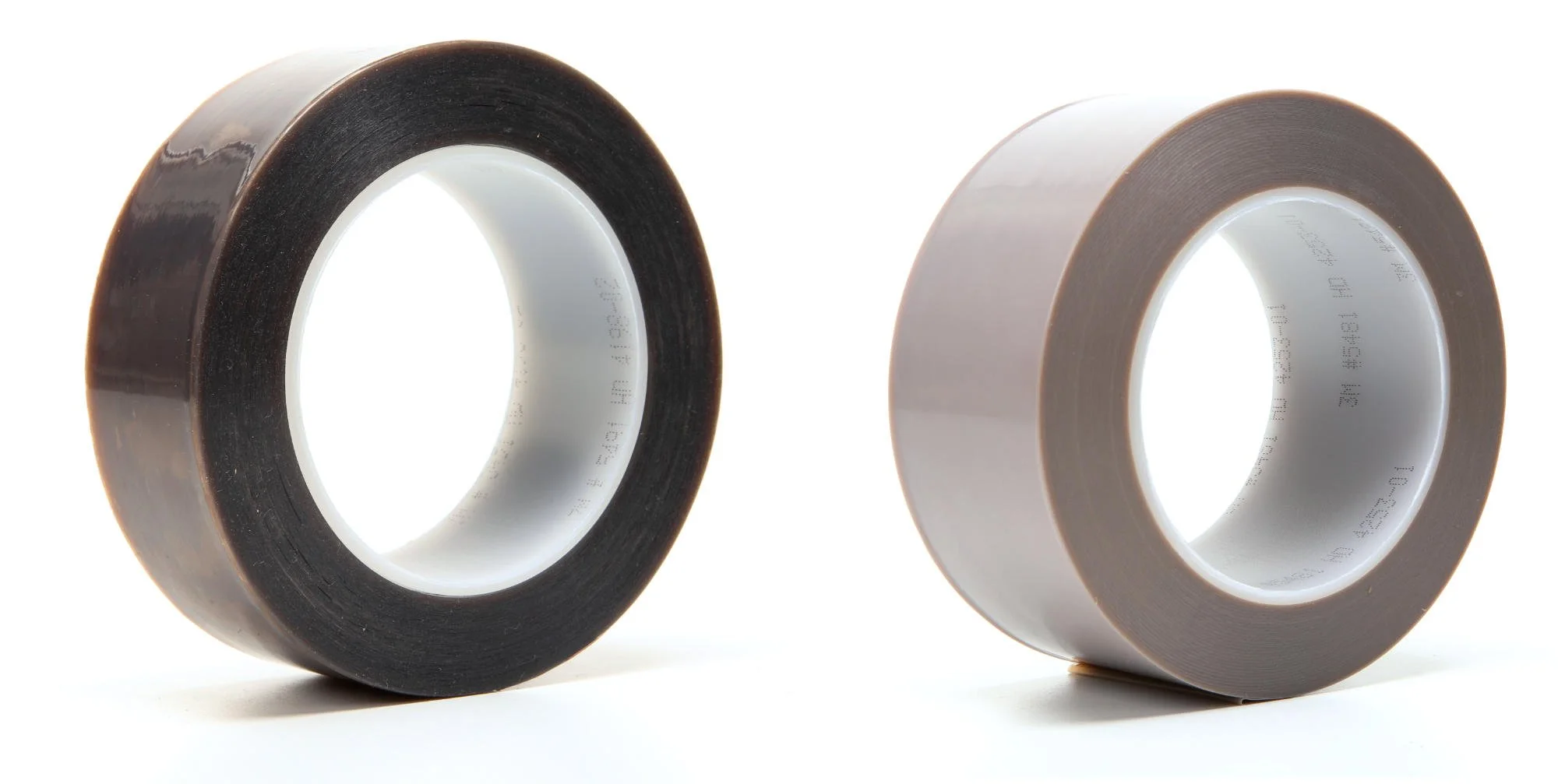
PTFE (Teflon™) tapes are high performance, non-stick materials designed for demanding industrial environments where heat, chemicals, friction, and electrical stress must be controlled with precision. Constructed from PTFE film paired with high temperature silicone or acrylic adhesives, these tapes provide smooth release surfaces, long-term heat resistance, outstanding dielectric strength, and chemical inertness. This combination makes PTFE tapes indispensable across electrical systems, heat-sealing and packaging equipment, aerospace assemblies, and industrial processing environments that require clean release, thermal stability, and consistent insulation performance.
Thermal and Electrical Performance
Operating temperature range: –54°C to 260°C (–65°F to 500°F)
High dielectric strength for electrical insulation typically ranging from 250 to 500 V per mil in accordance with ASTM D149
Excellent resistance to solvents, fuels, oils, and corrosive chemicals
Low coefficient of friction for smooth, repeatable release
Dimensional stability under thermal cycling and mechanical stress
These properties allow PTFE tapes to maintain stable performance across electrical, thermal, and mechanical systems, even during prolonged exposure to heat and aggressive chemical environments.
Common Failure Modes to Consider
Although PTFE tapes exhibit exceptional performance, certain failure modes must be considered. Adhesive cold flow can occur when continuous pressure is combined with high temperature exposure. Thermal expansion and contraction can cause edge lifting if surface preparation is insufficient. Dielectric breakdown may occur if tape surfaces become contaminated with oils, metal fines, or moisture during use. Skived PTFE may wear in areas exposed to high abrasion, while extruded PTFE may provide insufficient conformability on curved surfaces. Understanding these behaviors allows engineers to select the proper PTFE construction and adhesive system for the application.
Common Applications of PTFE Tapes
Here are the primary application areas for adhesive-backed PTFE tapes.
1. Electrical and Electronics
PTFE tapes provide the dielectric strength, thermal endurance, and chemical stability required for sensitive electronics and high-heat electrical environments. Adhesive-backed grades such as 3M™ PTFE Film Electrical Tape 60, 61, and 63 deliver long-lasting insulation on coils, capacitors, transformers, stators, and wire harnesses exposed to elevated temperatures or solvent-rich conditions. Their non-stick PTFE backing prevents abrasion and carbonization, while silicone or acrylic PSAs maintain bond integrity under thermal load.
Typical Uses
Coil, capacitor, and transformer insulation
High-voltage motor winding protection
Heat-exposed wire harness wrapping
EMI/RFI barrier layers
Cable splicing and dielectric shielding
Electrical Grade PTFE Tapes
3M™ PTFE Film Electrical Tape 60
High dielectric strength
Thermosetting silicone adhesive
Flame retardant and chemically resistant
Applications: Coil insulation, transformer protection, high-temperature wiring
3M™ PTFE Film Electrical Tape 61
5-mil flame-retardant PTFE backing
High dielectric withstand and abrasion resistance
High arc and chemical resistance
Applications: High-voltage insulation, cable splicing, transformer coil wrapping
3M™ PTFE Film Electrical Tape 63
Acrylic PSA for solvent-laden environments
Flexible, carbonization-resistant PTFE backing
High dielectric strength
Applications: Motor windings, electrical devices, thermal-resistant assemblies
2. Heat Sealing and Packaging
PTFE tapes enable clean, consistent non-stick performance in continuous thermal processing and packaging systems. Their low-friction PTFE backings prevent sticking on heat-sealing jaws, hot presses, laminating bars, and food-contact packaging equipment. Silicone adhesives withstand high heat while maintaining secure bond strength to metals and composite tooling surfaces.
Typical Uses
Heat-sealing jaws and sealing bars
Non-stick layers for hot presses
Food packaging and laminating equipment
Release surfaces for heated tooling
PTFE Slick Surface Tapes
PTFE release tapes create smooth, low-friction surfaces that stand up to heat, abrasion, and chemical exposure. Made with PTFE and high-temperature silicone or acrylic adhesive, they prevent sticking on sealing bars, rollers, press plates, and extrusion tooling. Their durable release surface improves throughput, reduces scrap, and extends equipment life.
Top PTFE Release Tapes for Packaging and Thermal Processing
3M™ PTFE Extruded Film Tape 5490
Smooth, low-friction PTFE
Standard-strength silicone PSA
High chemical and abrasion resistance
Applications: Heat sealing, hot-press release, chute lining
3M™ PTFE Extruded Film Tape 5491
Thicker PTFE backing and enhanced adhesive
Built for irregular or textured surfaces
Heat resistant to 500°F
Applications: Industrial sealing bars, hot presses, high-wear surfaces
Thin, conformable skived PTFE
High-temperature silicone adhesive
Low friction for curved or contoured tooling
Applications: Heat sealing, chute liners, extruder rollers, high-temperature harnessing
3. Aerospace and Automotive
Aerospace and automotive systems demand materials that can withstand heat, vibration, chemical exposure, and long-term mechanical stress. PTFE tapes—including 3M™ 60/61/63, 3M™ 5490/5491 and Saint-Gobain CHR® 2045/2255—provide insulation, low-friction release surfaces, and chemical stability for components operating in extreme environments.
Typical Uses
High-temperature wire harness insulation
Abrasion and vibration barriers
Composite layup and mold release
Thermal insulation and gasketing
Aerospace-Grade PTFE Tape
High-modulus PTFE backing
Silicone adhesive engineered for harsh environments
High dielectric strength and chemical inertness
Applications: High-temperature insulation, gasketing, chemical barriers, chute linings
4. Chemical Processing and Industrial Manufacturing
PTFE tapes maintain non-stick performance and chemical resistance in aggressive environments found in industrial processing, composite manufacturing, and high-temperature production lines.
Typical Uses
Lining tanks, chutes, hoppers, and pipes
Release layers for composite layups
Low-friction tooling surfaces for adhesives, resins, and extrusion
Chemical-resistant barriers in high-wear environments
Common Industrial PTFE Materials
3M™ 5490/5491 – heat-resistant release surfaces for presses and sealers
CHR® 2045 – conformable non-stick cover layers
CHR® 2255 – high-wear thermal and chemical barriers
5. Converting & Manufacturing Integration
PTFE must be delivered in formats that support manufacturing efficiency, repeatability, and mechanical precision. Engineered Materials specializes in converting PTFE tapes into application-ready parts that integrate cleanly into automated or manual workflows.
Precision Slitting for PTFE Films
PTFE requires controlled slitting to maintain clean edges, dimensional stability, and adhesive integrity. EMI’s slitting processes ensure:
Tight tolerance widths for electrical and sealing applications
Smooth edges that reduce friction and prevent tape lifting
Reduced operator trimming and placement errors
Minimal material waste compared to wide OEM rolls
Die Cut PTFE Components
Die cutting improves accuracy and repeatability for sealing bars, insulation layers, and release surfaces. EMI produces:
Kiss cut parts for easy liner removal
Precut sealing jaw covers
Tabs, patches, and custom geometries
Repeatable patterns for high run production
Laminating PTFE to Specialty Substrates
To enhance strength, insulation, or release behavior, PTFE can be laminated to:
Insulation materials
Foam
Glass cloth
These constructions are used for high-temperature insulation pads, thermal barriers, and precision release surfaces.
Part Formats for Production
EMI delivers PTFE materials in multiple production-ready configurations:
Precision slit rolls
Level wound spools
Kiss cut sheets or pads
Custom die cut shapes
Laminated multi-layer composites
Preserving Adhesive Performance During Converting
Silicone and acrylic PSAs require controlled slitting, die cutting, and temperature management. EMI ensures:
No cold flow distortion
Clean release during application
Optimal adhesive wet-out on metals, films, and engineered plastics
Long term stability throughout the production cycle
Advantages of PTFE Tape in Industrial Settings
Non-stick surface enables clean, repeatable release
Chemically inert in harsh environments
High dielectric strength for sensitive electrical systems
Reliable bonding with silicone or acrylic adhesives
Available in skived and extruded PTFE constructions
Fully compatible with precision slitting, laminating, and die cutting
Comparison to Other High-Performance Tapes
PTFE vs. Polyimide
PTFE provides superior release and friction reduction
Polyimide provides higher dielectric resistance for extreme voltage
PTFE vs. Glass Cloth
PTFE is smoother and ideal for release surfaces
Glass cloth offers structural reinforcement and rigidity
PTFE vs. Polyester (PET)
PTFE withstands higher heat and aggressive chemicals
PET is suitable for basic insulation at lower cost
Considerations When Selecting PTFE Tape
Selecting the correct PTFE tape requires evaluating thermal load, dielectric requirements, chemical exposure, adhesive selection, geometry of the applied surface, and converting needs. High-temperature zones may demand silicone adhesives, while solvent-rich environments benefit from acrylic systems. Skived PTFE supports conformability, while extruded PTFE offers maximum wear resistance. Final performance depends on delivering the tape in the correct width, thickness, and converted format.
Engineered Materials: Your Partner for High Performance PTFE Tape Solutions
Engineered Materials supplies a complete portfolio of PTFE tapes from 3M™ and Saint-Gobain, including:
We help you evaluate operating conditions, choose the correct adhesive system, and select the optimal backing type for your application. Our precision slitting, laminating, and die cutting capabilities ensure every PTFE part arrives production ready, consistent, and engineered for long term reliability.
When your process requires non-stick performance, thermal stability, chemical resistance, or high strength electrical insulation, Engineered Materials delivers. Connect with our team to design a PTFE tape solution that improves production efficiency and supports dependable, long-term performance.